

This post may include affiliate links. Thank you for your support.
Looking for a quick, easy, healthy meal that rivals your favorite Thai takeout? Give my Coconut Curry Salmon recipe a try! Featuring moist, flaky fish and tender-crisp veggies swimming in a slightly spicy, delectably creamy coconut curried sauce, this 30-minute meal is the zesty Thai weeknight wonder you’ve been searching for.
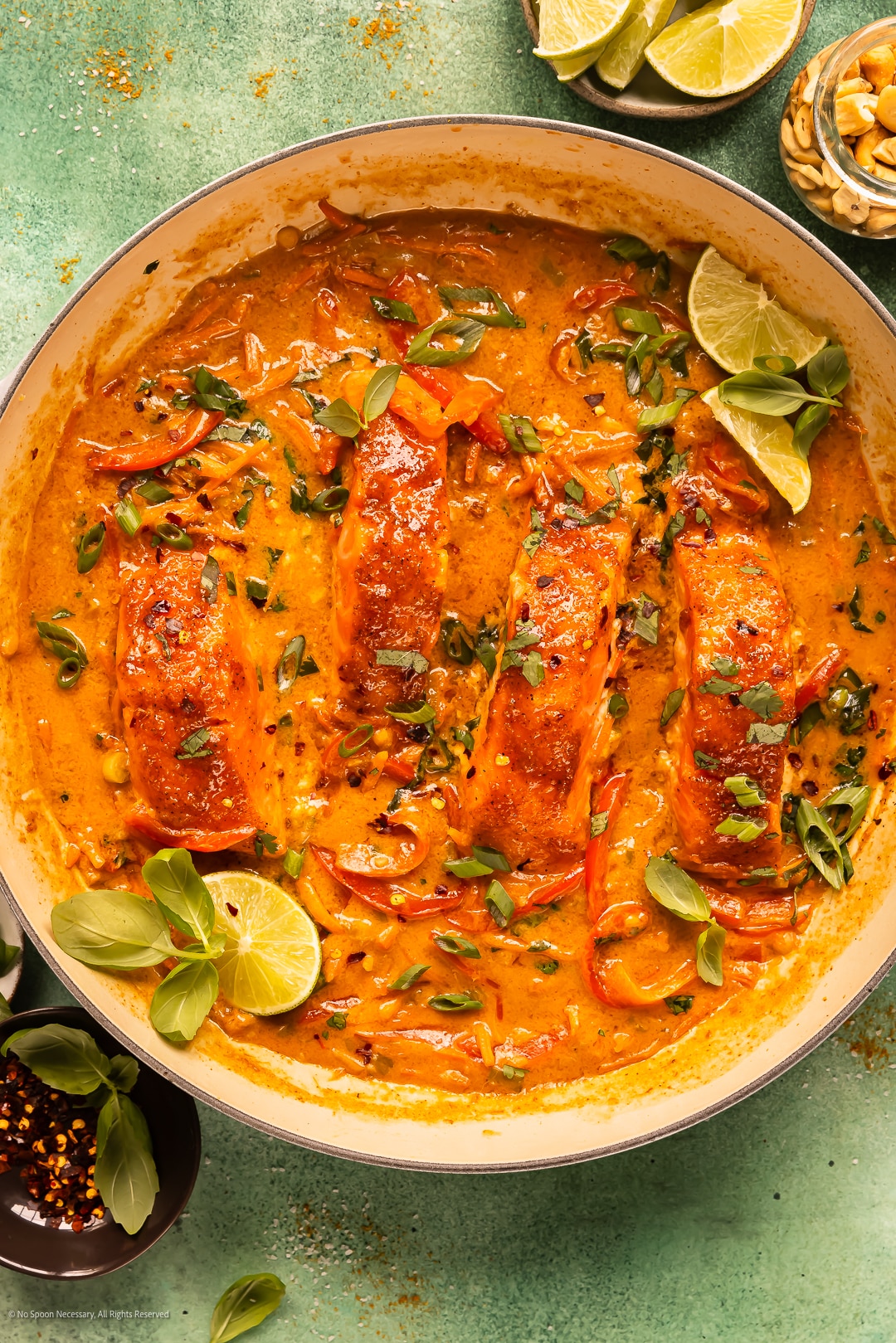
Table of Contents
- Why you’ll love this salmon with coconut curry
- What is coconut curry salmon?
- Ingredients for this curried salmon recipe
- How to make thai salmon curry
- FAQs: frequently asked questions
- Can you cook salmon in coconut milk?
- How do I make a tangy coconut fish curry?
- What are some good pairings for coconut milk curries?
- What is the best fish curry recipe and what is the best fish to use in it?
- How do I thicken fish curry?
- My Thai red curry tastes kind of like ketchup. What did I do wrong and how can I fix it?
- Serving coconut salmon curry
- Storing leftovers
- More international one pan salmon entrees!
- Coconut Salmon Curry
Why you’ll love this salmon with coconut curry
- Super Speedy – Just 10 minutes of prep and 20 minutes of cooking are all that stand between you and a delicious bowl of restaurant-worthy curried salmon recipe. It’s easy enough for even absolute noobs to master!
- Spectacularly Simple – This stunning Thai salmon looks like a painting; but, it’s made with only 8 fresh ingredients and a handful of pantry staples.
- Crave-Worthy & Cost-Effective – If you’re in the mood for Thai curry salmon, this homemade version is the way to go. This cashew coconut curry is impossibly creamy dreamy (just like your favorite takeout spot!). It is ready nearly as quickly as ordering out. AND, it costs less than half of what you’d pay for delivery. Plus, you don’t have to tip!
If you love deliciously flavorful curried food, be sure to try this scrumptious Chicken Curry Salad Recipe next.
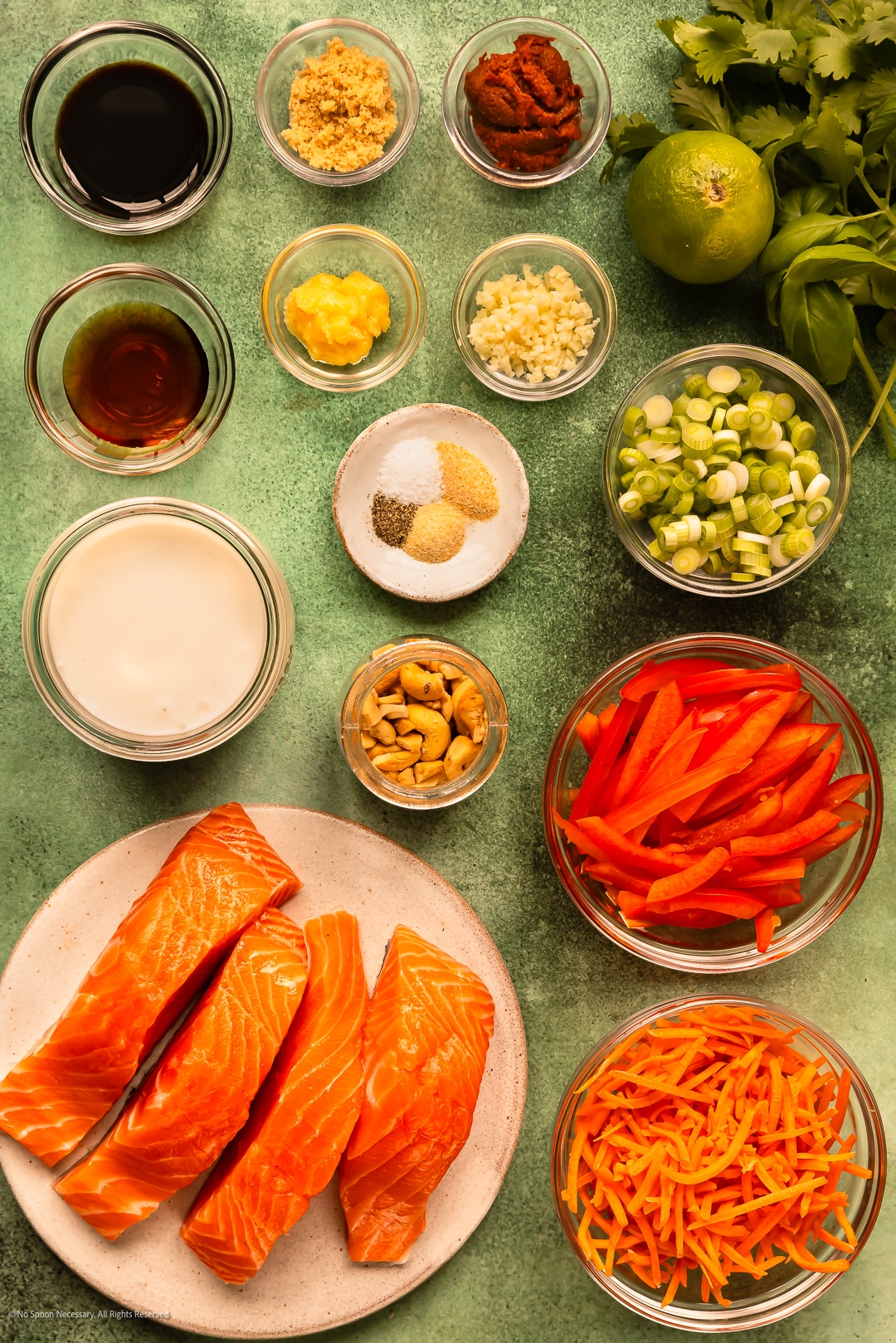
Ingredients for this curried salmon recipe
- Neutral Oil – Like avocado, canola, or grapeseed oil.
- Thai Red Curry Paste – You can usually find this in the international aisle of most grocery stores.
- Light Brown Sugar – Fresh out? Make your own by mixing 1 cup white sugar with 1 tablespoon of molasses.
- Onion Powder & Garlic Powder – This powdered allium duo of spices adds the sweet complexity of cooked onion and garlic without any fuss.
- Salmon Fillets – Check the freezer aisle for the best deals!
- Scallions – You’ll want to keep the whites/light greens for sautéing and the dark greens for a colorful garnish.
- Garlic & Ginger – Using fresh aromatics is preferred, but in a pinch you can swap in jarred minced garlic and a tube of ginger paste, or use a pre-made garlic ginger paste to cut back on prep time.
- Full-Fat Coconut Milk – Canned coconut milk is creamier and has a higher fat content than refrigerated, which gives the salmon curry sauce an extra rich and creamy consistency.
- Fish Sauce – For a salty, umami punch. Feel free to swap in soy sauce, tamari, or coconut aminos mixed with a bit of anchovy paste or miso.
- Low-Sodium Soy Sauce – Or a 50/50 mix of regular soy sauce and water.
- Red Bell Pepper – Red is the sweetest & prettiest of the bunch, but you’re welcome to use orange, yellow, or even earthy green bell pepper (or a mix of all of them) if you prefer.
- Carrots – Use a julienne peeler or mandoline, or buy a bag of shredded carrots to make prep painless.
- Fresh Cilantro and Basil Leaves – For freshness. If you can find it, go for Thai basil! If you’re not a fan of cilantro, just use more basil.
- Roasted Cashews – For salty crunch.
- Salt & Black Pepper – For seasoning.
Recipe variations
Whether you’re out of something, don’t like an ingredient, or have a food allergy, I want you to feel emboldened to tweak this Thai salmon curry recipe to fit your needs. Here are just a few variations you can try:
- Soy-Free – If soy is a no-no, swap in coconut aminos or Bragg’s liquid aminos for the soy sauce, opt for a Thai red curry paste that doesn’t use soybean oil (e.g. Kroger Private Selection). And use a soy-free fish sauce (e.g. Red Boat).
- Gluten-Free – Use low-sodium tamari or coconut aminos in place of soy sauce. Also, ensure both your curry paste and fish sauce are gluten-free.
- Extra Spicy – The curry paste already has some kick. But, if you’d like your salmon Thai curry to be fiery, consider adding minced chiles (e.g. scotch bonnet or serrano) to the mix when you sauté the aromatics.
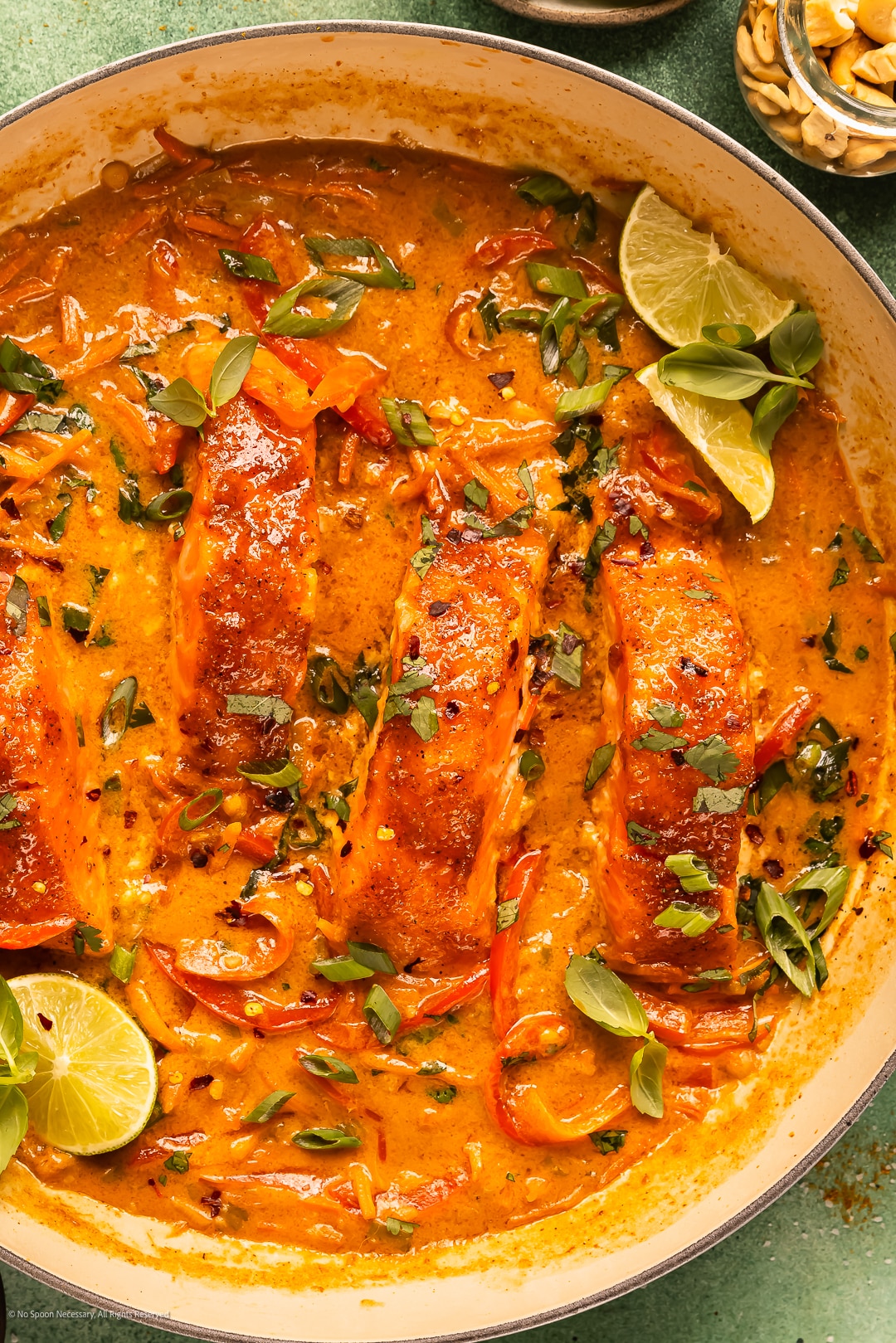
How to make thai salmon curry
Ready to get this Thai-inspired coconut curry salmon recipe on the dinner table in a hurry? Here’s how:
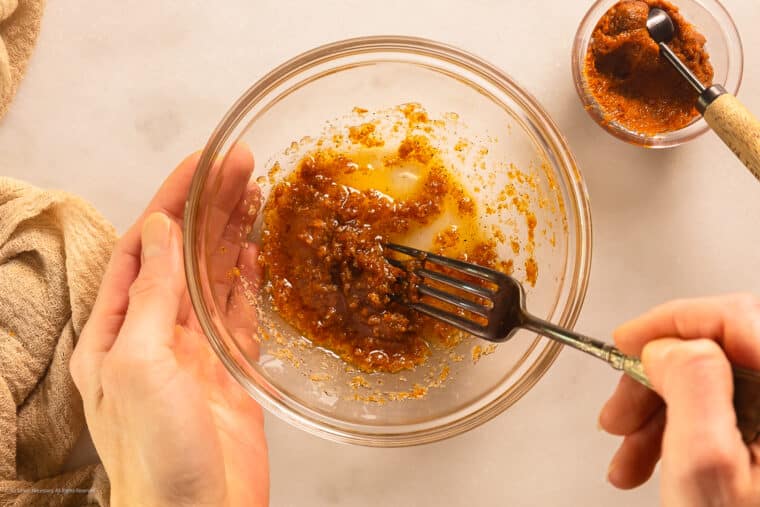
- Make Curry Rub: Use a small fork to mix the oil, curry paste, brown sugar, onion powder, garlic powder, kosher salt, and pepper together in a small bowl.
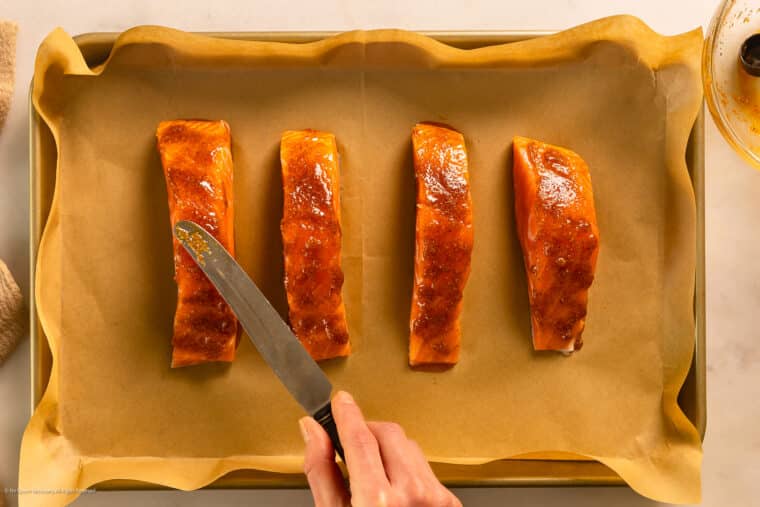
- Prep Salmon: Pat filets dry with paper towel and then arrange salmon skin side down onto a baking sheet. Dollop the curry mixture evenly over the top of the filets. Then, use the back of the spoon to evenly spread the mixture over the top.
- Partially Bake Salmon: Transfer the curry salmon to a 425-degrees oven and bake for 6-10 minutes.
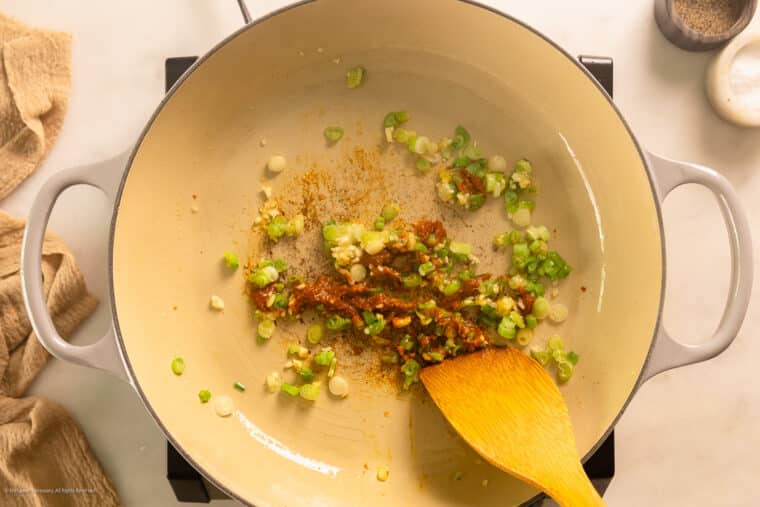
- Meanwhile, Start Coconut Curry Sauce: While the salmon is baking, start the sauce by heating a tablespoon of oil in a skillet. Then, add the scallions and cook for 2 minutes. Next, add the garlic and ginger and continue to cook, stirring, until fragrant, about 1 minute. Finally, add the remaining red curry paste and cook, stirring, for 1 more minute.
- Add Flavor: Pour the coconut milk into the skillet. Then, add the remaining sugar, fish sauce, and soy sauce and simmer for 1 minute.
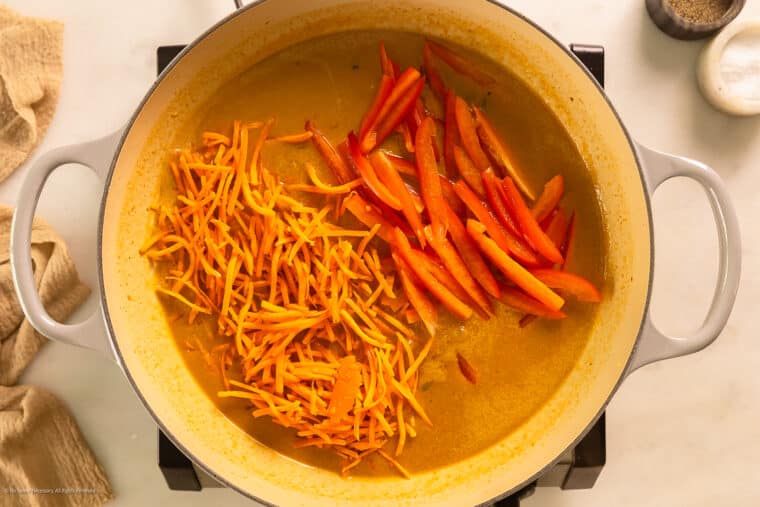
- Add Veggies: Stir the peppers and carrots into the coconut curry sauce and cook the veggies for 3-5 minutes.
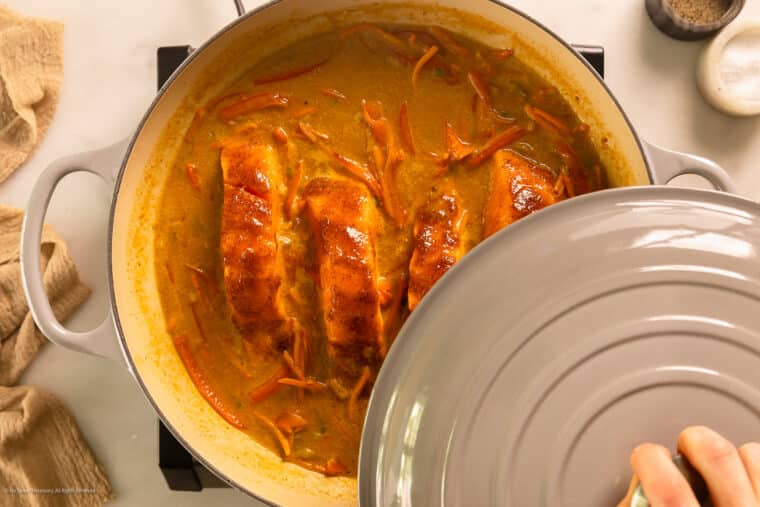
- Add Salmon to Sauce, Simmer: Remove the salmon from the oven and use a fish spatula to nestle the salmon filets into the curry sauce. Cover the pan and let the salmon simmer for 2-6 minutes, or until the salmon is cooked to your liking.
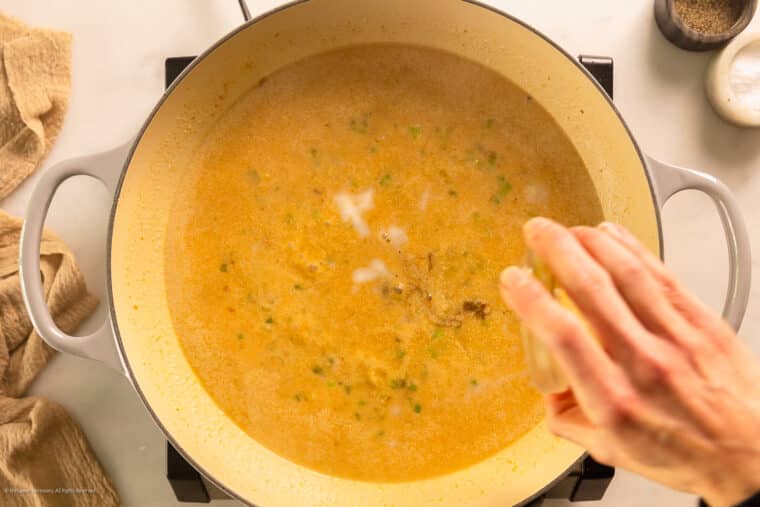
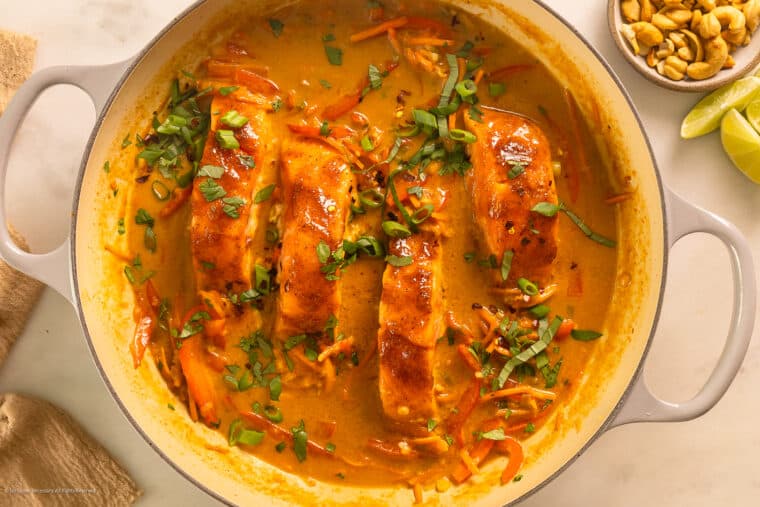
- Add Herbs, Adjust Taste: Stir the lime juice into the curry sauce and then garnish the salmon with dark green onions, torn basil, and chopped cilantro.
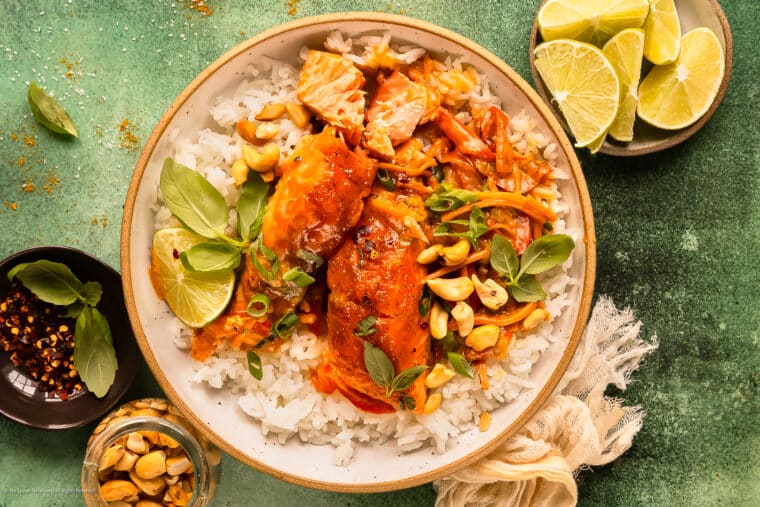
- Garnish and Serve: Serve curried salmon over rice, top with roasted cashew nuts, and serve with lime wedges on the side. Enjoy immediately.
Expert tips
- Search for Stray Bones & Scales – It’s always good practice to lightly run your fingers over the surface of your salmon fillets to seek out any pin bones that might’ve been missed in butchering. If you find one, use a pair of kitchen tweezers to yank it out in a straight line, like you would a splinter. Next, flip the fish over to examine the skin and make sure all the scales have been removed. If you find any, simply use a knife angled at 45 degrees to pop them off.
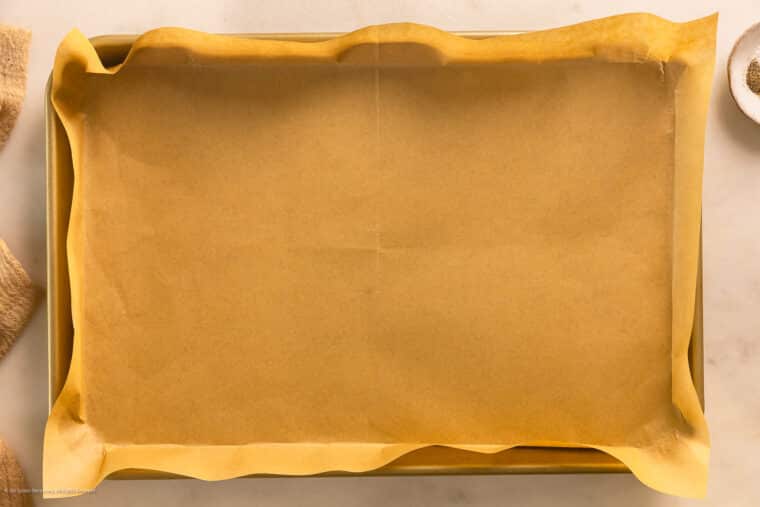
- Use Parchment or Foil – Since we’re baking the salmon fillets first before adding them to the curry sauce, you’ll need a baking sheet. Make life easier by lining it with parchment paper or foil so clean up is a snap.
- Undercook in the Oven – Par-cooking the salmon in the oven helps to develop flavor (hello Maillard reaction!), but pull the fillets out when they’re still shy of being done. They’ll continue to cook in our yummy coconut curry sauce, and you don’t want to dry them out!
- To Peel Ginger, check out this article teaching you all about peeling and preparing fresh ginger root.
- Know Your Cooktop – If you have a gas burner, turning off the flame is enough to reduce the heat. However, if you have an electric burner, move your pan off the burner when you’re done. The cooktop will hang onto heat for quite awhile, and you don’t want to overcook anything.
FAQs: frequently asked questions
Got questions? I’ve got answers! If you ever run into an issue, have a question, or need any clarification – please feel free to drop them in the comments section. I’m happy to help when I can!
Can you cook salmon in coconut milk?
Yes, but I recommend par-baking it first to help develop the flavor. Once it’s most of the way cooked, nestle it into the curry sauce to finish cooking to your desired level of doneness.
How do I make a tangy coconut fish curry?
Using high-quality Thai curry paste should ensure that your red curry salmon is perfectly tangy. You’re welcome to squeeze on some fresh lime juice for an added hit of acidity.
What are some good pairings for coconut milk curries?
I like to serve my Thai curry salmon recipe over steamed sticky jasmine rice, but it would also be delightful over cauliflower rice or rice noodles.
What is the best fish curry recipe and what is the best fish to use in it?
I think this recipe for Thai fish curry with salmon is the bee’s knees!
How do I thicken fish curry?
If you follow the recipe below, you shouldn’t need to thicken it. However, if you prefer your curry sauce to be extra thick, simply simmer the coconut milk mixture until it reaches your desired viscosity before adding the peppers, carrots or fish.
My Thai red curry tastes kind of like ketchup. What did I do wrong and how can I fix it?
It sounds like you might’ve gone a bit overboard with the brown sugar. To fix it, add a bit more curry paste for heat, fish or soy sauce for umami saltiness, and/or lime juice or tamarind paste for tanginess and acidity.
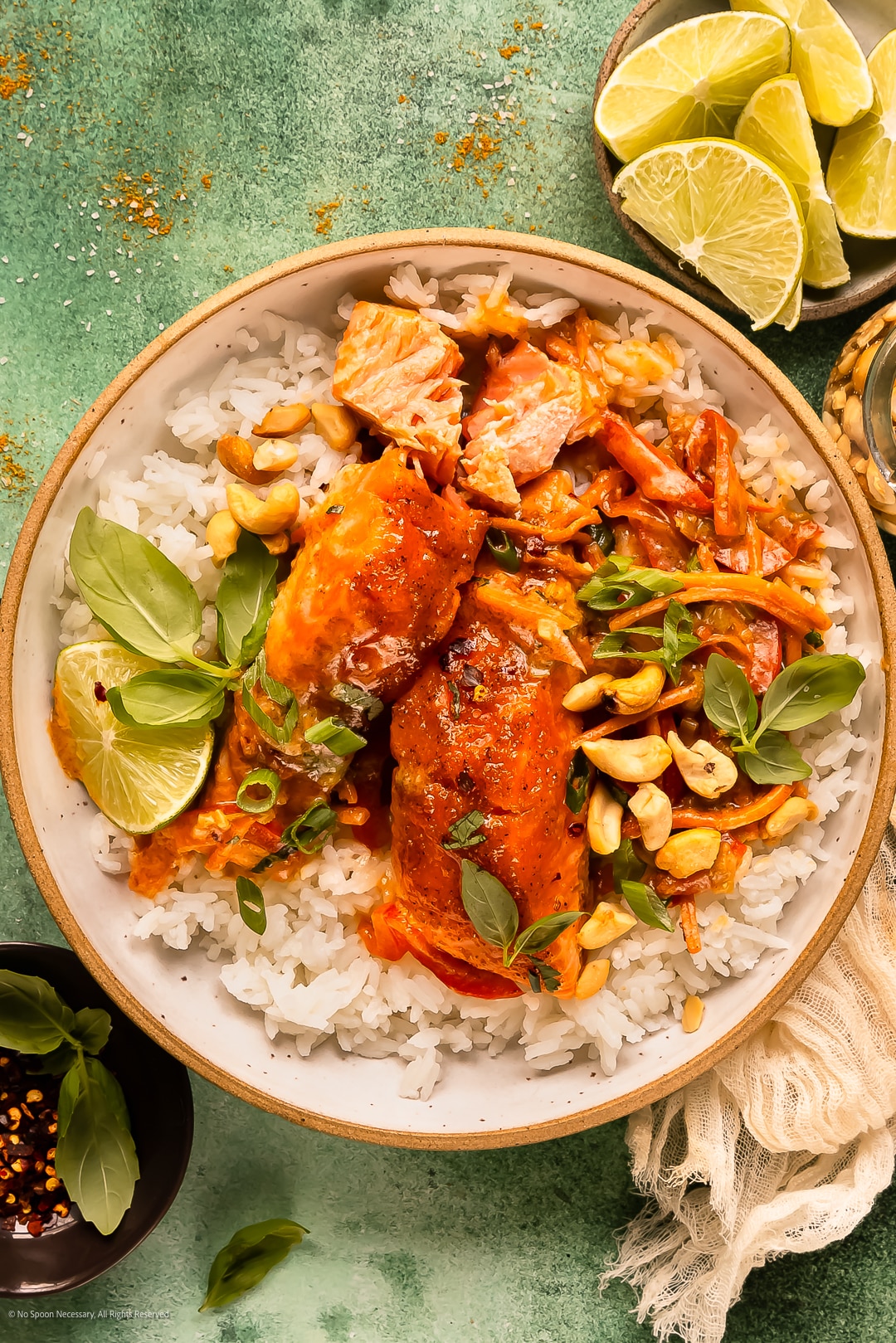
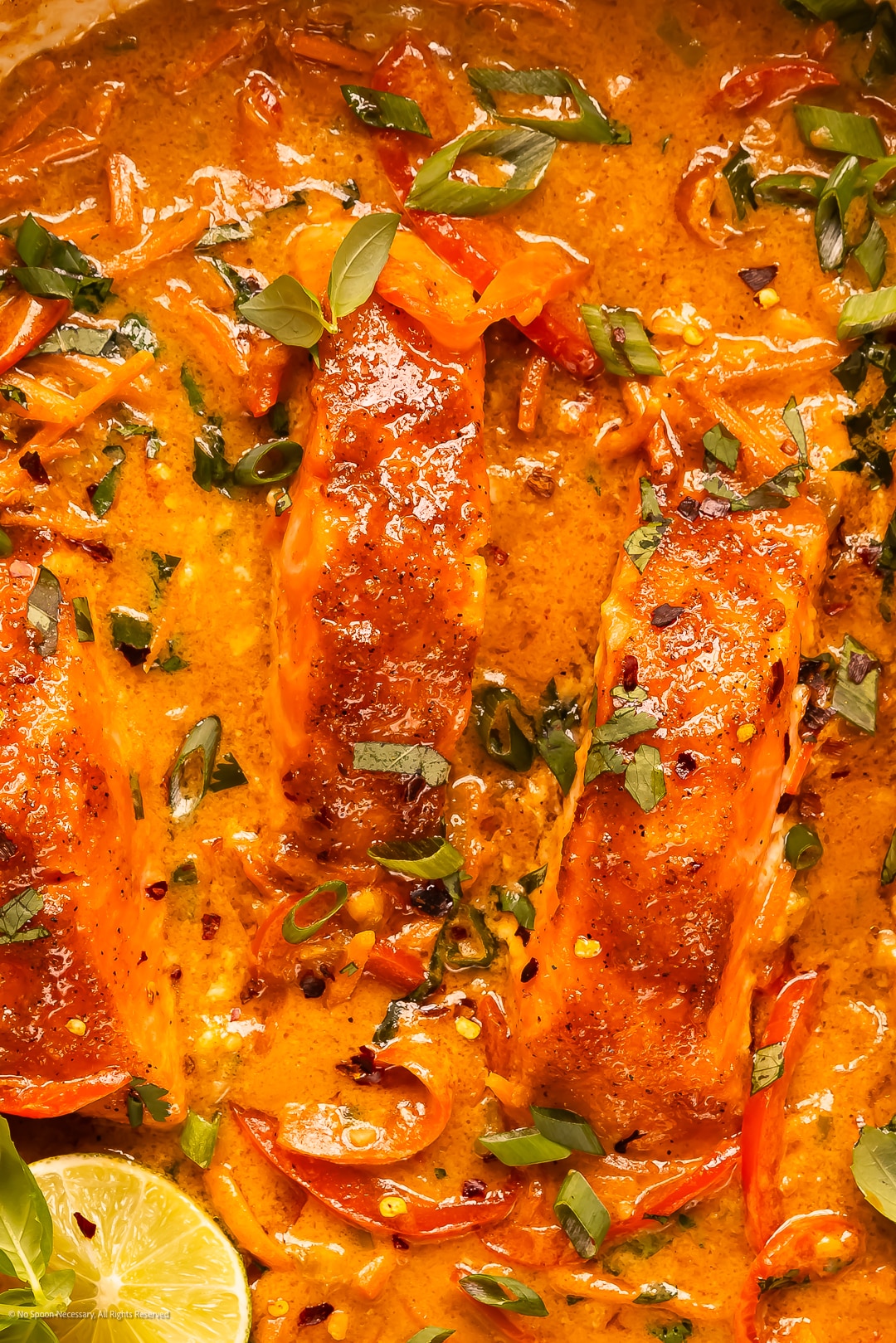
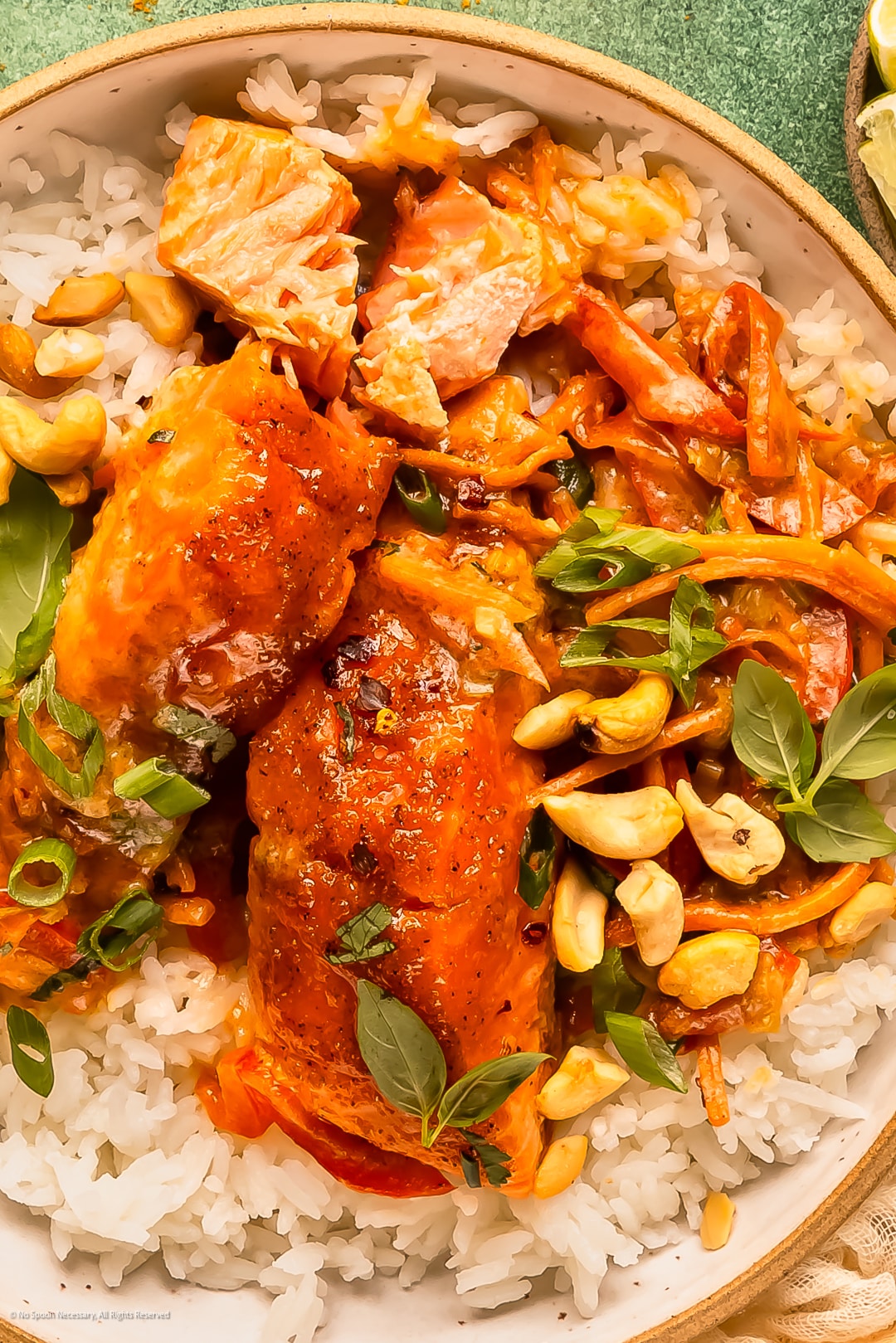
Whether you’re reeling in compliments at your next dinner party or just fishing for a flavorful weeknight escape, this Thai Coconut Red Curry with Salmon is sure to be the catch of the day. From its splash of color to its current of rich, creamy sauce, it’s a shore-fire way to net yourself a deliciously memorable meal. Until next time, keep your forks at the ready and your aprons tied tight – who knows what culinary shores we’ll explore next?
Cheyanne
Craving MORE? Follow all the deliciousness on Facebook, Pinterest and Instagram!
More international one pan salmon entrees!
Coconut Salmon Curry
Equipment
- 1 Small Bowl (for the curry rub)
- 1 Rimmed Baking Sheet (for partially baking curry salmon)
- 1 large skillet (for making coconut curry salmon)
Ingredients
Curry Salmon
- 2 TBS Neutral Oil – such as vegetable or canola; DIVIDED
- 1 TBS + 2 ½ tsp Thai Red Curry Paste – DIVIDED
- 3 tsp Light Brown Sugar – DIVIDED
- ¼ tsp EACH: Onion Powder and Garlic Powder
- 4 4 to 6 ounce Salmon Fillets
- To Taste Kosher Salt and Ground Black Pepper
Coconut Curry Sauce
- 6 large Scallions – thinly sliced; white/light green and dark parts separated (1/2 cup whites) (darks as garnish)
- 2-3 cloves Garlic – peeled and minced
- 2 tsp Freshly Grated Ginger
- 1 (14-ounce) can Full Fat Coconut Milk – well shaken or stirred
- 1 TBS EACH: Fish Sauce and Low-Sodium Soy Sauce
- 1 Medium Red Bell pepper – de-seeded and thinly sliced into ½-inch pieces
- 1 Cup Julienne or Matchstick Carrots
- 1 Whole Lime – half juiced; half sliced into wedges
- 3 TBS Chopped or Torn Fresh Basil Leaves
- 2 TBS Chopped Fresh Cilantro
- ½ Cup Salted and Roasted Cashews – roughly chopped
Instructions
- Preheat Oven: Arrange oven rack to the middle position and then preheat the oven to 425-degrees Fahrenheit. Line a rimmed baking sheet with aluminum foil or parchment paper for easy clean up and then set aside.

- Make Curry Rub: To a small bowl, add 1 tablespoon of oil, 1 1/2 teaspoon of curry paste, 2 1/2 teaspoons brown sugar, onion powder, garlic powder, 1 teaspoon kosher salt, and a pinch of pepper. Use a fork or small whisk to stir the ingredients together until thoroughly combined. Set the bowl aside.
- Prep Salmon: Pat the salmon filets completely dry with paper towels and then arrange them skin-side-down onto the prepared baking sheet. Use a spoon to dollop about a teaspoon of the curry paste mixture evenly over the top of the salmon filets, and then use the back of the spoon or a butter knife to spread the mixture evenly over the salmon filets.
- Partially Bake Salmon: Transfer the curry salmon to the preheated oven and bake for 6-10 minutes, or until the salmon is almost cooked to your desired level of doneness. (Note: You’ll be continuing to cook the salmon in the coconut curry sauce on the stovetop in the next steps. Therefore, I recommend erring on the side of caution here and under-cooking the salmon versus over-cooking the filets.)
- Meanwhile, Start Coconut Curry Sauce: While the salmon is baking, start the curry sauce. Heat the remaining tablespoon of oil in a skillet (large enough to hold the salmon filets in a single layer) over medium heat. Once the oil is shimmering, add the white and light green parts of the scallions and season with a generous pinch of salt. Cook, stirring, for 2 minutes. Then add the minced ginger and grated ginger to the pan and continue to cook, stirring, until fragrant, about 1 minute.
- Add Flavor: Add the remaining 1 tablespoon + 1 teaspoon of red curry paste to the pan and cook, stirring, for 1 more minute.Pour the coconut milk into the skillet and use a wooden spoon to scrape up any brown bits stuck to the bottom of the pan. Then, add the remaining ½ teaspoon sugar, fish sauce, and soy sauce to the pan and simmer, stirring, until fully combined, about 1 minute. Reduce the heat under the pan as needed to maintain a simmer.
- Add Veggies: Add the peppers and carrots to the coconut curry sauce and stir to combine. Return the contents to a simmer and then cover the pan. Cook the veggies for 3-5 minutes, or they’re almost tender-crisp, depending upon how tender you like your vegetables. Then, add the lime juice to the sauce and stir to combine.
- Add Salmon to Sauce, Simmer: Remove the salmon from the oven and use a fish spatula to nestle the salmon filets into the curry sauce. (Note: If you don’t like salmon skin, make sure you remove it before adding the salmon to the sauce.) Cover the pan and let the salmon simmer for 2-6 minutes, or until the salmon is cooked to your desired level of doneness.
- Add Herbs, Adjust Taste: Remove the pan from the heat. Then, dust the top of the coconut curry salmon with the dark green onions, torn basil, and chopped cilantro. Taste the sauce and adjust the flavor profile as you see fit.
- Garnish and Serve: Serve curried salmon over rice, top with roasted cashew nuts, more fresh herbs and serve with lime wedges on the side. Enjoy immediately.

Notes
- Got questions? I’ve got answers! If you ever run into an issue, have a question, or need any clarification – please feel free to drop them in the comments section. I’m happy to help when I can!
Nutrition
Did you make this recipe?
Mention @nospoonnecessary on Instagram and tag it #nospoonnecessary!
©No Spoon Necessary. All images and content are under copyright protection. Please do not use any images without prior permission. Please do not publish this recipe without prior consent. To reference this recipe, please link directly to this post.